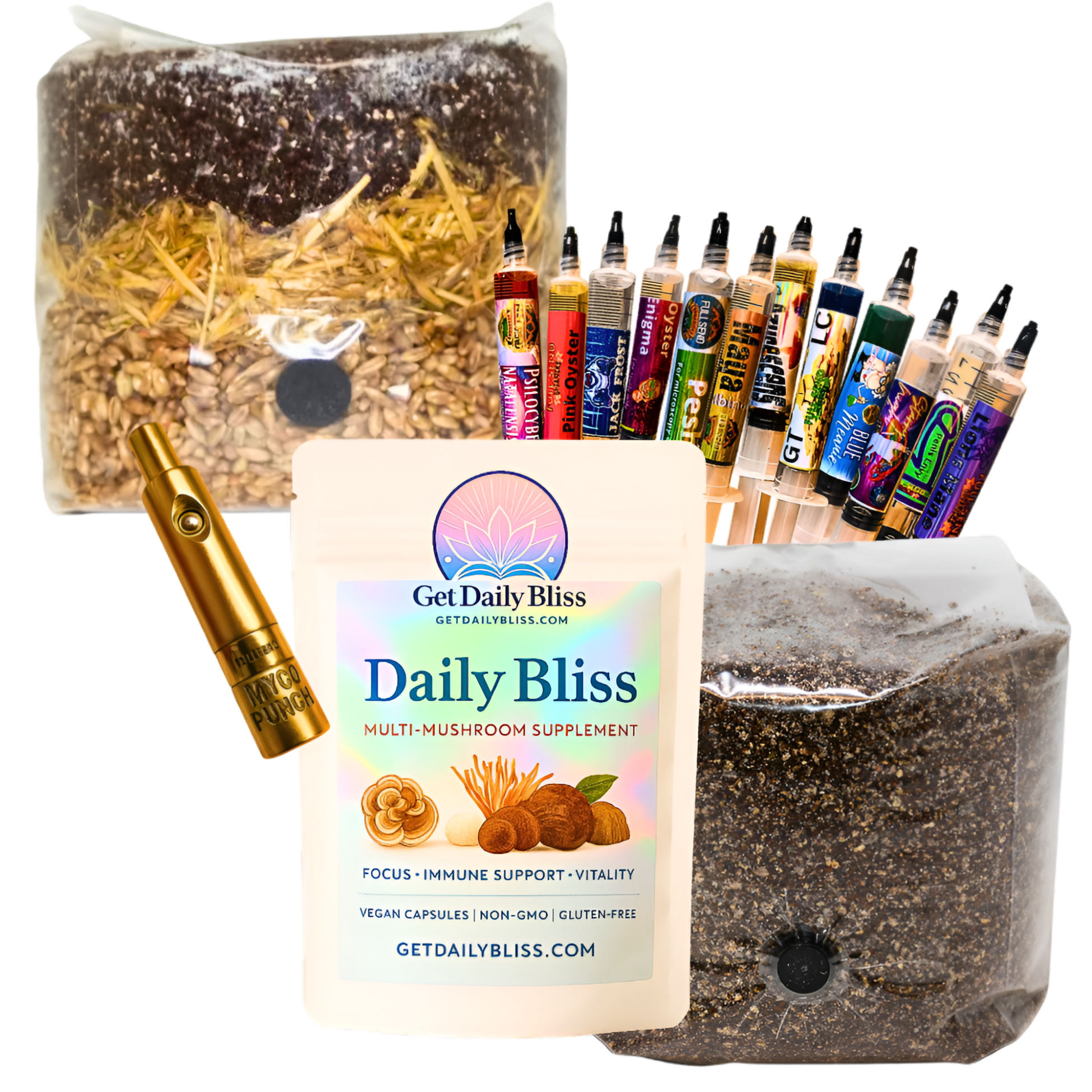
Liquid Culture vs Spore Syringes: Key Differences
Liquid culture and spore syringes serve the same purpose—inoculating mushroom substrates—but differ significantly in composition, preparation, and results.
Liquid culture contains actively growing mycelium in nutrient solution. Spore syringes contain only spores suspended in sterile water. This fundamental difference impacts colonization speed, viability, and ease of use.
For Enigma mushroom research, liquid culture offers faster colonization. For traditional Psilocybe cubensis varieties, spore syringes remain popular for cost and storage longevity.
Understanding both methods helps researchers make informed decisions about culture storage, inoculation timing, and substrate preparation.
Liquid Culture: Speed & Efficiency
Liquid culture contains living mycelium actively growing in nutrient broth. This makes it the faster option for inoculating grow kits and substrates.
Colonization Speed: Liquid culture colonizes in 1-2 weeks. Spore syringes require 3-4 weeks. The difference is significant for time-sensitive research.
Viability: Liquid culture remains viable longer than spores when stored properly. Proper storage methods extend viability for months.
Success Rate: Liquid culture shows higher colonization success rates—often 95%+. Spore syringes average 70-80% depending on technique.
For Enigma liquid culture work, the speed advantage is crucial since Enigma strains develop slowly. Getting mycelium established quickly matters for long-term cultivation.
Fullsend Organicks offers liquid culture bulk deals and individual Enigma cultures for serious researchers.
Spore Syringes: Cost & Longevity
Spore syringes contain dormant spores that germinate when introduced to favorable conditions. They're the traditional option with established research history.
Cost: Spore syringes cost less than liquid culture—typically 50-70% cheaper. Budget researchers prefer spore options for scaling.
Storage: Spore syringes store for years when refrigerated properly. Proper storage extends viability from standard conditions.
Genetics Diversity: Fullsend Organicks mushroom spore library includes dozens of Psilocybe cubensis varieties including Golden Teacher, AA+ strains, and more.
However, spore syringes require proper germination technique. New researchers often achieve better success with liquid culture due to built-in mycelium growth.
Direct Comparison: Liquid Culture vs Spores
Speed: Liquid culture wins—1-2 weeks vs 3-4 weeks for spores.
Cost: Spore syringes win—50-70% cheaper than liquid culture.
Success Rate: Liquid culture wins—95%+ success vs 70-80% for spores.
Storage: Spore syringes win—viable for years vs months for liquid culture.
Variety: Spore library wins—many strains available. Liquid culture limited to active cultures like Enigma.
Best For Beginners: Liquid culture—higher success rate with simpler technique.
Best For Advanced Researchers: Spore syringes—cost-effective for bulk cultivation and comparative studies.
Which Should You Choose?
Choose liquid culture if:
- You prioritize fast colonization
- You want highest success rate
- You're researching Enigma or slow-growing strains
- You're new to mushroom research
- Time-sensitive experiments matter
Choose spore syringes if:
- Budget is primary concern
- Long-term storage needed
- Studying genetic diversity
- You want established strain library
- Comparative studies across varieties
Best Practice: Use both. Start with liquid culture for quick establishment, then maintain cultures via tissue transfer. Backup with spore syringes for long-term storage.