Why Learn How to Grow Mushrooms
Knowing how to grow mushrooms gives you control over quality, freshness, and cost. Store-bought mushrooms are expensive, often days past peak freshness, and limited in variety. Learning how to grow mushrooms at home solves all three problems. Whether you're starting with a simple grow kit or building a full mycology setup, mushroom cultivation is one of the most rewarding hobbies you can pursue.
How to grow mushrooms successfully comes down to following proven methods. This isn't experimental science — millions of people grow mushrooms at home each year. Success rates with quality cultivation supplies and basic technique easily exceed 80%. That's better than most home gardening pursuits.
This guide on how to grow mushrooms covers every stage. From selecting your first spore syringe through harvest, every step is explained clearly. You'll learn substrate preparation, sterile inoculation technique, environmental control during colonization, and proper fruiting conditions. By the end, you'll have everything needed to grow mushrooms successfully.
The investment to learn how to grow mushrooms is minimal. Basic supplies cost $50-100 and produce multiple harvests. Compare that to buying mushrooms weekly at the store — the home grower breaks even within 2-3 harvests. After that, every flush is essentially free. This economic reality alone justifies learning how to grow mushrooms.
Beyond economics, knowing how to grow mushrooms connects you to mycology — one of nature's most fascinating kingdoms. Mushrooms aren't plants or animals but distinct organisms with unique biology. Understanding how to grow mushrooms opens doors to functional wellness, food production, and even artistic applications. The future of fungi continues expanding our understanding of these incredible organisms.
Start learning how to grow mushrooms today: Beginner grow kits, professional bundles, and complete supplies at Fullsend Organicks.
How to Grow Mushrooms: Substrate Selection
The first step in how to grow mushrooms is selecting your substrate. Substrate is the growing medium that feeds your mushrooms — think of it as the soil for fungi. Different mushroom species require different substrates. Manure-based substrates support cubensis mushrooms beautifully. Hardwood substrates favor gourmet species like Lion's Mane and Shiitake.
Sterilization is critical when learning how to grow mushrooms. Raw substrate contains competing organisms — molds, bacteria, and other fungi — that will overwhelm your mushroom culture. Pressure cooking at 15 PSI for 2.5 hours eliminates these competitors. Many people learning how to grow mushrooms skip this step entirely by purchasing pre-sterilized substrate.
Choosing Your Substrate When Learning How to Grow Mushrooms
Beginners learning how to grow mushrooms should start with proven substrate options. Rye berry grain works exceptionally well for cubensis species. Pre-sterilized and ready to inoculate, rye berry eliminates the most challenging aspects of how to grow mushrooms at home. Just inject your spores or liquid culture and wait.
More advanced growers exploring how to grow mushrooms use custom substrate blends. CVG (coconut coir, vermiculite, gypsum) creates an excellent bulk substrate for spawn-to-substrate ratio expansion. Hardwood sawdust supplemented with bran works for gourmet species. Each substrate teaches you something new about how to grow mushrooms effectively.
Substrate Hydration in How to Grow Mushrooms
Proper hydration is essential when learning how to grow mushrooms. Substrate must reach about 60-65% moisture — squeezed material should release just a few drops of water. Too dry and mycelium can't colonize; too wet and contamination flourishes. Pre-hydrated substrates eliminate guesswork.
This is why understanding how to grow mushrooms means understanding substrate. Get your substrate right and most other variables become manageable. Get your substrate wrong — wrong type, wrong hydration, wrong sterilization — and even perfect technique elsewhere won't save your grow. Substrate is foundational to how to grow mushrooms successfully.
Quality substrates for how to grow mushrooms: Manure mixes, grain spawn, and rye berry kits.
How to Grow Mushrooms: Inoculation Methods
Inoculation is where you introduce mushroom genetics into your substrate. This is the moment in how to grow mushrooms where sterile technique matters most. Any contamination introduced during inoculation creates competition that can overwhelm your culture. Working in a clean space, sterilizing injection points, and minimizing exposure time all reduce contamination risk dramatically.
Two main inoculation methods exist when learning how to grow mushrooms. Spore syringes contain millions of spores in sterile water. Inject into substrate and mushroom mycelium grows from germinated spores. Liquid culture contains living mycelium that colonizes 2-3 times faster than spores.
Spores vs Liquid Culture in How to Grow Mushrooms
Most people learning how to grow mushrooms start with spores. Comparing spores versus liquid culture reveals tradeoffs: spores are cheaper and easier to obtain, but slower and more contamination-prone. Liquid cultures cost more but colonize faster with better contamination resistance.
This guide on how to grow mushrooms recommends spores for first-time growers. Golden Teacher spores are the gold standard for beginners. The strain is forgiving, the spores germinate reliably, and visible progression teaches you about mushroom biology. Once comfortable with spore-based inoculation, graduate to liquid culture for faster results.
Sterile Technique for How to Grow Mushrooms
Sterile technique separates successful growers from those plagued by contamination when learning how to grow mushrooms. Clean your workspace thoroughly before inoculation. Wash hands, wear gloves if available. Flame sterilize needles between uses. Work in front of a still-air box or laminar flow hood if possible.
Many people learning how to grow mushrooms work in a clean bathroom with the shower run on hot beforehand (humidity drops airborne contamination). This isn't ideal but works reasonably well for beginners. As your interest in how to grow mushrooms grows, investing in proper sterile workspace equipment improves success rates significantly.
Inoculation supplies for how to grow mushrooms: Spore syringes, liquid cultures, and Pesh Hawaiian strains.
How to Grow Mushrooms: Colonization Phase
Colonization is the period in how to grow mushrooms when mycelium spreads through your substrate. This phase typically lasts 2-4 weeks depending on substrate, strain, and conditions. During colonization, your substrate gradually turns white as mycelium expands. Watching this happen is one of the most satisfying aspects of how to grow mushrooms.
Temperature affects colonization dramatically when learning how to grow mushrooms. Most cubensis strains colonize best at 75-80°F. Cooler temperatures slow mycelium growth; warmer temperatures may favor contaminants. Maintaining consistent temperature in this range accelerates colonization and reduces contamination risk simultaneously.
Environment Control for How to Grow Mushrooms
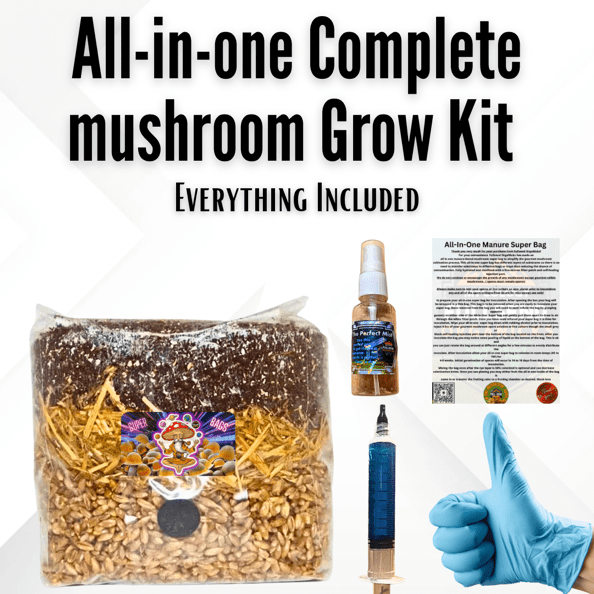
During colonization, oxygen exchange should be minimal. Unlike fruiting phase which requires high fresh air exchange, colonizing substrate prefers stagnant conditions with just enough oxygen for mycelium respiration. All-in-one grow bags with integrated filters handle this automatically — one reason they're so popular for people learning how to grow mushrooms.
Monitoring colonization teaches you about how to grow mushrooms. Healthy mycelium appears as white, rope-like growth spreading through substrate. Contamination appears as different colors — green, blue, black, or pink. Learning to recognize healthy versus contaminated growth is a critical skill in how to grow mushrooms successfully.
Patience During Colonization
Patience is essential when learning how to grow mushrooms. Colonization happens at its own pace. Opening containers to check progress introduces contamination and air disturbance that slows growth. Trust the process — leave colonizing substrate alone except for visual checks through the bag or jar walls.
Some strains colonize faster than others when you're learning how to grow mushrooms. Hillbilly genetics may colonize in 2-3 weeks. Other strains take 4-5 weeks. Thai Pink Buffalo presents middle-ground colonization speeds. Documenting your strains and conditions builds knowledge about how to grow mushrooms in your specific setup.
Optimize colonization in how to grow mushrooms: Use all-in-one grow bags, choose fast-colonizing strains, or learn from our resources.
How to Grow Mushrooms: Fruiting & Harvest
Fruiting is the climax of how to grow mushrooms — when mycelium produces actual mushrooms. The transition to fruiting requires specific environmental changes. Temperature drops slightly (65-75°F). Humidity rises dramatically (85-95%). Fresh air exchange increases significantly. Light exposure begins. These combined changes signal mycelium to produce fruiting bodies.
Triggering fruiting in how to grow mushrooms involves several steps. Move colonized substrate from dark, warm colonization environment to your fruiting chamber. Reduce temperature 5-10°F. Increase humidity by misting walls (not substrate directly). Provide indirect light on a 12-hour cycle. Within 5-10 days, tiny mushroom pins should appear.
Fruiting Chamber Setup for How to Grow Mushrooms
Beginners learning how to grow mushrooms can use simple shotgun fruiting chambers — clear plastic tubs with holes drilled in sides for air exchange. Complete grow kits often include integrated fruiting chambers, simplifying the process for first-time growers learning how to grow mushrooms.
Advanced setups for how to grow mushrooms involve dedicated fruiting tents with humidifiers, exhaust fans, and full environmental controls. These investments make sense once you're scaling production beyond a few flushes per year. For most people learning how to grow mushrooms at home, simple chambers work perfectly fine.
Harvesting Your Mushrooms
Harvest mushrooms when they reach proper maturity. Most cubensis mushrooms are harvested just before the veil under the cap breaks. Pull and twist gently to remove mushrooms — don't cut, as cutting leaves stub tissue that can rot and contaminate substrate. Knowing when to harvest is a key skill in how to grow mushrooms successfully.
After first harvest in how to grow mushrooms, your substrate can produce multiple flushes. Rehydrate the cake (substrate cake) by submerging in water for 12-24 hours, then return to fruiting conditions. Most substrates produce 3-4 flushes before exhaustion. Each subsequent flush is typically smaller than the first.
Fruiting supplies for how to grow mushrooms: Complete grow kits, professional bundles, and all supplies.
How to Grow Mushrooms: Common Problems
Even experienced growers face challenges when learning how to grow mushrooms. Contamination is the most common issue. Green mold, black mold, and bacterial wet rot can all destroy a grow. Recognition is the first step — learning what contamination looks like prevents you from continuing to nurture failed batches when you should be starting over.
Slow colonization frustrates many people learning how to grow mushrooms. If your substrate isn't showing mycelial growth within 7-10 days of inoculation, check temperature first. Cool conditions dramatically slow growth. Verify your spores or liquid culture were viable — sometimes products fail and inoculation was futile from the start. Quality spore syringes reduce this risk.
Contamination in How to Grow Mushrooms
Contamination prevention is paramount in how to grow mushrooms. Sterile substrate, sterile inoculation, sterile environment — these reduce contamination risk dramatically. When contamination appears, isolate the affected container immediately. Don't try to "save" contaminated substrate — bag it and discard properly to prevent spreading spores to clean batches.
Common contaminants in how to grow mushrooms include Trichoderma (green mold), Penicillium (blue-green), Aspergillus (black or yellow), and bacterial wet spot. Each appears differently and requires immediate response. Quality cultivation supplies from reputable sources like Fullsend Organicks reduce contamination risk significantly.
Yields and Multiple Flushes
Yield concerns are common when learning how to grow mushrooms. Low first-flush yields often result from inadequate inoculation, suboptimal conditions, or impatient harvesting. Document everything — substrate type, hydration level, temperature, humidity, fresh air exchange, harvest timing. Patterns will emerge revealing what works best in your specific setup.
Multiple flushes are part of mastering how to grow mushrooms. Most growers experience 50-70% yield in subsequent flushes compared to first flush. Some strains produce more flushes than others. Lion's Mane typically produces 3-4 flushes. Cubensis strains often produce 4-5. FAQ resources cover specific troubleshooting questions.
Master how to grow mushrooms: Read more at Fullsend resources, check FAQs, or shop quality supplies at Fullsend Organicks.